Monday, November 7, 2016

Milton's View of the Bible

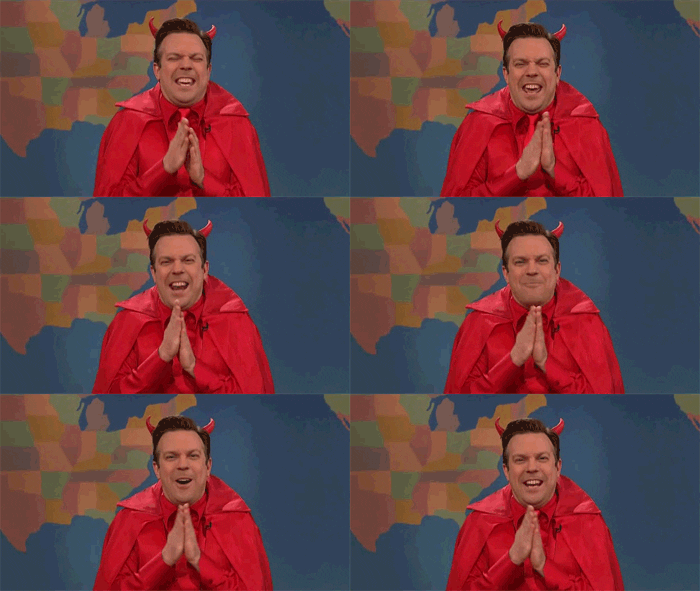
Why did Milton choose to tell the story of Satan? He seems to have felt the need to put his own view of Satan into the mix and make him the anti-hero or main character of his tale. Through Milton's story we are able to see the beginnings of Satan's perspective on the fall of Eden and why he pushed the humans toward committing sin.


This perspective of Satan seems a little bit different then how we usually hear of Satan. We see Satan as being portrayed as this military leader giving a speech to his troops to not give up even though they have been defeated by God once. This portrayal seems to almost humanize Satan in way that seeing him as this other worldly grotesque beast cannot do. Even though you do not agree with what he doing, bertraying God, you can relate to the speeches that he is giving to his troops to hold their heads up and continue to fight.

Courageous General


Satan being Satan w/ some beautiful poetry?

My initial observation of this reading was the way these words sounded and how they flowed when being read. The structure of these words was incredible, and it sounds so much better when read aloud. I believe it is better when read aloud as opposed to being read silently due to the fact that this was story was spoken aloud by a blind Milton before being transcribed. 

After having read the first couple hundred lines, and re-read them, I listened to a recording while following along. Having it read to me while I read as well helped me understand the rhythm of the lines. This was helped even more by the footnotes which tells the reader which words were meant to be read in a certain way, a way which the modern English reader may not read them (i.e. "perpetual" is meant to be read with 3 syllables as "per-pet-chal").

The brief introduction before the reading also kind of prepared me for what I was about to dive into, which I found helpful in navigating the words. Also, identifying the subject and sorting the pronouns was massively helpful (though difficult).

me @ all the helpful stuff

The Satan-talk begins pretty much right away, when discussing Eden, and we all know what happened there. We also hear about Satan convincing/tricking/getting people to do other stuff, "Who first seduced them to that foul revolt? / Th' infernal Serpent" (lines 33-34). 

Also early on, we get that Satan and his "host of rebel angels" (dibs on that band name) are cast out because Satan wanted to overthrow God's monarchy (around line 40-45), which I found to be a really interesting word choice especially due to the discussions we've recently had in class about treason/Charles' execution. While there's almost a 20 year gap between these two events, I can't imagine the views on treason changed much, and if a king can be executed for it I imagine Satan won't be looked upon highly for speaking against God's monarchy. 


I found this a really pleasant challenge in that this was really difficult to read, but greatly rewarding once I understood it. I'd also like to throw in the disclaimer that I'm proud to have been able to understand maybe 1/3 of what I read, but that's a good enough improvement for me. 

How A-Muse-ing

I find the most interesting aspects of Paradise Lost to be Milton's use of language and the context that surrounds the language within the writing. What I mean is that Milton makes clear early in the epic that he is speaking the words that are brought to him through a "Heav'nly Muse". This Muse is not specifically given name, but the idea that verse and elevated language come from the divine property of the Muse seem appropriate and coincide with the subject that Milton is writing about.

Despite the difficult language in Paradise Lost, we are given what is almost a short summary at the beginning of Book One which made it significantly easier for me to follow the movement of the first section. It is my interpretation that the form that Milton writes in (be it his own voice or that of the Muse) is meant to be eloquent and in this way demonstrating the importance of the divine nature of the content. The summary couldn't help me all the way through, however, as there are plenty of what I assume are biblical allusions that I am just not familiar with.

Another aspect of this epic that I found important is the way meter is included without rhyme. Although this is also found in Beowulf and The Odyssey, it is specifically stated before Book One in the section titled The Verse that the English language's modern "bondage" to rhyme is "troublesome" and there is a reason why Milton chose to forgo the use of rhyme in Paradise Lost. Although I am not sure if this section was written by Milton himself, it addresses the lack of rhyme in Milton's verse and states the belief that truly elevated language is muddied or made less eloquent by the "jingling" sound of "like endings". While I don't disagree or agree with this statement particularly, I do find it interesting that this was an idea that people shared. It is stated that the carefully chosen number of syllables and the way they are carried from one verse to the next is what truly makes powerful language in poetry and this certainly reflects in Milton's writing. I am inclined to agree that had Milton chosen to write Paradise Lost entirely in rhyming meter, it would not have this same quality of sound that makes it so grand.

Sunday, November 6, 2016

Supernatural

Okay.. so, what? I understand the first few lines of this poem, where it is talking about eve eating the forbidden fruit and that being the fall of mankind (which it is the fall of mankind in most religions.) I understand where it says that this is what brought death into this world, it brought sin, hate, all negative things into the world... and I understand the part where it says Jesus is to restore the world, (because he does when he comes back to life.) This is something that you would have to have strong biblical knowledge to understand. This is not resonating with me...whatsoever.

From what I can understand... and without any prior knowledge I feel like I wouldnt understand this at all.. it seems to go from the fall of man, to the fall of satan... but satans fall eventually led to the fall of mankind. Its one in the same. Satan fell from heaven due to his own actions but blamed everything on God, His refusal to bow down, and his desire for power... his own selfishness put him in hell. "Against the throne and monarchy of God,/ Raised impious war in Heav'n and battle proud," (why is heaven spelled like that?) shows this fight that Satan had with God. He went against him knowing God had the power to cast him out of heaven.

I dont know if anyone else watches the show Supernatural... but remember when all the Angels fell from heaven to Earth? Thats the picture I get in my head when I read this.


Except it wasnt Angels falling from heaven, it was Satan and it was within good reason, and he wasnt coming to Earth, but Hell.

This, from what I can tell is an elaborate way of explaining what the bible already tells us, with what seems to be much exageration,

Locked out of Heaven

This book revolves around the Devil's fall from heaven and the aftermath that follows due to how the Devil feels. 

One part that I found particularly important was the juxtaposition of the Devil's life when he was in heaven and then how it was when he fell into hell. One line I thought really described this well saying how he once had the view of an angel but now all he sees is this dismal dungeon, where there is constant fire and he is trapped here for an eternity. This reminds me of a rags to riches story but in this case it would be riches to rags. The devil had everything he could possibly need in heaven but due to his own actions, he fell from heaven and ended up in hell. The problem here lies in that the devil didn't think it was his own fault that he ended up in hell and blames it all on God. Imagine losing everything you have and believing that it was caused by someone else's doing. You would be pretty upset too.

How did the Devil end up in hell you may ask? Well, he wanted to be just as powerful as God was and take his place. The Devil talks about how he will never bow down to God as it is better to reign in hell than it is to serve in heaven. Basically the devil would rather be his own ruler in misery than a servant in happiness. He viewed God as a tyrant over heaven who needed to be dethroned so that he could be God and rule over the universe. This reminded me of people during this time seeing their rulers as tyrants and not wanting to follow them too. I think more important than the devil viewing God as a tyrant, is the fact that the devil would not have been happy serving in heaven no matter who was in charge as he isn't happy serving anyone but himself. 

When the Devil and his followers were cast out of heaven, it enraged the Devil. It then became his sole mission to ruin any good plans that God had for the world. He talks about how doing ill towards others will be their sole delight and how they will think up things that will offend God the most. I wonder if the Devil had actually managed to dethrone God, if his plans for the world would have been good. I'm not sure if the devil was inherently evil or if being kicked out of heaven made him evil in order to spite God.

Thursday, November 3, 2016

Words, Words, and More Words

I'll admit, I'm feeling a bit overwhelmed with this reading. There is so much to unpack, and at the same time, I don't know where to start or even what there is to unpack. My guess (and hope) is that I'm not alone.

The first thing that I will say is reading The Argument before actually starting the poem was super helpful. I at least have a good sense of the plot thus far and where it is heading. We basically start with Satan in hell with all his crew after they have just been kicked out of heaven. Milton seems to believe that this fall took place before the creation of man and the rest of the earth. As far as I'm aware, there isn't really any evidence to support if his timeline is right. There also isn't evidence to support it being wrong. So my first question is this. Did Milton come up with this timeline himself? Or was he influenced by the beliefs of the church at the time? I am wondering if this understanding of the fall of Lucifer comes from Milton, kind of like how a lot of people's understanding of hell comes from Dante.

If I had to pick a passage that I was interested in the most, it would be lines 162-165. "If then His providence/Out of our evil seek to bring forth good/Our labor must be to pervert that end/And out of good still to find means of evil". This is part of Satan's response to a demon who basically says "What are we going to do now"? Not only is this piece of the response easier to understand, it also has some sinister connotations. The word "pervert" is a fascinating word choice. While we now usually associate the word with something sexual, Milton uses it in a way that is so much more. Synonyms include, but are not limited to: distort, corrupt, subvert, twist, bend, abuse, misapply, misuse, misrepresent, misinterpret, and falsify. (Thank you, Google). This one little word implies so much about Satan's intentions in this poem.

Another thing I noticed about this poem was how much I was reminded of The Screwtape Letters. Writing from or about the perspective of the darker side of a story is a common thread in these two pieces of literature. Another common thread is the focus of the demons on getting back at God through the downfall of mankind.

I'm apprehensive yet excited to keep reading. Intuition tells me that like the previous works we've read, it will be worth stumbling my way through if only to come out the other side.

Monday, October 31, 2016

Hold the Social Contract, Keep a Shred of Humanity?

Have you ever heard of a social contract? Simply put, a social contract is an agreement among people who live together in a society (that’s what makes it a social contract). Social contracts usually involve people giving up a little bit of the great freedom, power, and independence they would have in nature in order to be safer, more fruitful, more productive, and more efficient. For instance, a king’s subjects can’t just do whatever they want—they must obey the king’s laws—but the king works to keep his subjects safe.

At least, that’s how it ought to be. Several testimonies on Macbeth’s leadership in Act V, Scene 2 reveal Macbeth’s failure to care for his subjects as a good king should:
• Menteith refers to him as “the tyrant” (V.2.13).
• “Those he commands move only in command, / Nothing in love: Now does he feel his title / Hang loose about him, like a giant’s robe / Upon a dwarfish thief” (V.2.22-25). –Angus
• “Well, march we on, / To give obedience where ‘tis truly owed” (V.2.30-31). –Caithness

In other words, Macbeth, like any leader, ought to be obeyed due to his position of leadership; a good leader, however, would have earned that obedience by loving and caring for his subjects. Instead, Macbeth treats everyone poorly and in some cases is needlessly cruel. (Give me one good reason for Macbeth’s verbal abuse of the servant in lines 11-22 of Scene 3!) He is suspicious of everyone, paranoid that any of them could harm him as he has harmed so many others.

You could say that he is only looking out for his own interests, but that is not true either. He is looking out for himself, yes, but he is also looking out for his queen. He pesters the doctor in Scene 3 as any ordinary spouse might (except, of course, the addition of veiled threats). Such a scene makes me wonder what it was like when Lady Macbeth birthed that child to whom she has “given suck” . . .


Nervous new dad Macbeth. If you can picture it, that might be as disturbing as anything actually in the play.

Upon Lady Macbeth’s death, Macbeth is distraught. His famous lines (V.5.20-31) are mournful and human. Macbeth’s love of Lady Macbeth is the only sign of humanity in him. The very person who, in the first act of the play, wished for inhumane cruelty for herself and her husband is now the indicator that he has any humanity left in him. And yet Macbeth has committed murder several times over. He has become a monster and a tyrant, but he is still like a human in a few small ways. If he is capable of these things, could you be as well? Could I?

And that just might be the most terrifying thing of all.

I pledge that I have neither given nor received any unauthorized aid on this assignment.