Showing posts with label team shakespeare. Show all posts

Wednesday, September 28, 2016

Pardon Me, Sir

Okay, so here's the deal: the Pardoner is one greedy little dude. Frankly, I don't like him one bit. I mean, yeah, his story is interesting and everything, but like, he's all about the money and quite frankly, he doesn't care about much else.
Anyway, he's real big on sinning, and not just the "I'm selling this church stuff so pay me" kind of sinning. Like the dude is into partying and chicks, kinda like that drunken frat guy at the function that nobody's trying to mess with because he's just too sloppy. Real classy, Pardoner. 
The end of this tale is pretty funny/strange, like the two friends set out on a mission and end up killing each other... Which I mean, probably isn't the worst outcome that could have happened. I'm not gonna lie, it wasn't much of a loss. Maybe Chaucer did us all a favor and thought that we simply needed something like that to happen. My dear Geoffrey, you were correct.


Yo I'll tell ya what I want, what I really really want!!

You can say one thing about the Pardoner: the man knows what he wants. And what does he want? Money! He should keep half an eye out for dragons.


It’s interesting (and very telling)  that, immediately before reciting his story, the Pardoner admits that he would “telle an hundred false japes more” (394) in order “to winne” (403), and that he has told this specific tale often for that purpose. I completely expected the sales pitch at the end of the tale, and I don’t begrudge the Host for unmercifully humiliating the Pardoner or, rather creatively, threatening to cut off the his “collions” (952) and to enshrine them in “an hogges tord” (955).

However, greed isn’t the Pardoner’s only vice, although it’s definitely his greatest. He explains that he often preaches against his own misconducts, and then spends over a hundred lines of his tale rambling about how terrible drunkenness is, and he is sure to spend some time decrying other related kinds of sin and debauchery, such as gluttony, gambling, and prostitution. We know that he admits that he “wol drink licour of the vyne, and have a joly wenche in every toun” (452-453), plus he has a “draughte of corny ale” (456) before he even starts his story. An alcoholic con man. What a charmer.

Scotty is too good to be compared the Pardoner, but he'd be a great drinking buddy, so here he is. Hopefully he won't commit any murders. 
It’s pretty funny, if more than a bit rude, that the Pardoner says that he chooses to recite fables to the masses because he believes that simple stories are the only thing that unlearned people can “wel reporte and holde” (438). I think it’s ironic that he looks down his nose at uneducated people that share his vices, when he himself admits that he’s not actually not as well-educated as other, more powerful, churchmen; after all, he can only “speke a wordes few” (344) of Latin, which was the main liturgical language in Medieval Europe. Moreover, he purposefully preaches with fables that advise against his own vices. It’s a very “do as I say, not as I do” setup, although I think the addendum “but pay me first” should be added to it.


Tuesday, September 27, 2016

The Pardoner's Tale and Its Irony

In medieval times,“pardoners” would sell these indulgences, kind of like certificates, in order to forgive someone’s sins and even sometimes salvation from eternal damnation. Before the Pardoner begins his tale, he admits that he is a fraud. He proudly exclaims that he is only in the pardoning business for the money and that he is guilty greed. He even says that his relics are really "ful of cloutes and of bones," (pg 234, line 348). Kind of reminds me of Matilda's father, a greedy and sly used-car salesman.


The Pardoner tells us a tale of three young men who spend all of their time drinking, swearing, and gambling, and just wasting their lives away. It is here that the Pardoner interrupts his tale to tell the group why all of these things are terrible sins forbidden by God in the Bible, but he truly believes "gret swering is a thing abhominable," (pg 240, line 631). The three young men find out that an old friend has been killed by Death, and in their drunkenness decide that they shall find Death and kill him as revenge.

Quick sidebar question: how exactly does one kill Death?!


Anyway, back to the tale.

While wandering the road looking for Death, they meet an old man who says that he had left Death under an oak tree and points them towards a grove. Under the tree they find several sacks of gold and decide to wait until nightfall to carry them away so as not to arouse suspicion. While one of the young men goes to get bread and wine, the other two plot to kill him upon his return so that they only have to split the gold two ways. Meanwhile, the man getting food and drink poisons two of the three wine bottles so that he can keep the gold all to himself. Upon his return he is stabbed by his two friends and then they drink the poisoned wine in celebration and die as well. Inconceivable!!


This tale demonstrates that greed will only lead to your own demise and that it brings out the worst in people. It is so ironic that the Pardoner is telling this tale when he is practically the embodiment of greed and intoxication. So, do you think is it possible for him to tell a tale of morals and be taken seriously? 


Wednesday, September 14, 2016

Who Is The Squyer...?

So I'm not going to lie, it took me about a solid half an hour just to read the beginning of the prologue to this story. That kind of makes me nervous considering we haven't even started reading the actual story yet, and there are a little less than 400 pages in this version of The Canterbury Tales.
But, that terrifying fact aside, I kind of enjoyed the introduction of Chaucer's story (once I finally understood what exactly was going on) and I'm interested to see where it goes from here. It is slightly annoying that I have to continue looking from the footnotes to the explanations on the right side of the page to the actual writing itself, but honestly I'd be lost without all of the help in understanding Chaucer's language. 

The prologue starts off like practically every other book I've read that was written in Middle English: there's a super cool knight with super cool (almost demigod) abilities and a spotless reputation. So far, so good. Chaucer has introduced us to such a character right off the bat.
However, I have to say, I'm much more interested in this squire guy; the knight's twenty year-old son. I honestly wonder why he was mentioned at all, but I'm hoping that he becomes the central character in this story because he does seem to have a more interesting personality than his dad, who seems to be the stereotypical chivalrous knight from back in the day. Cool and all, but I want some variation, yanno? Anyway, when Chaucer described the squire as a dude that sings and dances, for some reason I couldn't stop picturing Eddie Redmayne in Les Mis. Weird, I know, because this man was no knight and this is the wrong time period and setting, but hey, I'm gonna run with it. 
Basically, I'm just stoked to see what comes out of this squire dude. I feel like he has some solid potential, and if he's as available as Chaucer makes him out to be, there's no doubt in my mind that a lady will be introduced sometime in the near future. Now I'm not a huge fan of sappy romances, especially when they're written in Middle English (sorry Dr. MB) but maybe I could get behind this one considering I've read about twenty lines that talked about the squire and I'm already in his corner. Well done, Chaucer. Well done.

Tuesday, September 13, 2016

Once upon a time in a galaxy far, far away...

I've always loved stories, particularly fairy tales. When I was little I had dozens of collections of fairy tales, some of which were so big that I had to get an adult to pick it up from the shelf for me. As one may expect, the go-to introduction for all of those stories in all of those books was "Once upon a time." As cliché as that is, it's a pretty-sounding phrase that helps the reader shift into gear and get ready for the story they're about to read. That's a good bit of legwork for four words. Another example is Star Wars' "A long time ago in a galaxy far, far away...," which does the same amount of work in ten words, which is still rather concise.

Chaucer, on the other hand, does not have any limit on how many words he can use, nor any qualms about using them. He is not concerned with being concise. The very first line of the Canterbury Tales tells us that the story begins in "Aprill," although you might not realize that until you reread that passage and find out that the Ram has "halfe cours y-ronne" (8), and subsequently read the footnote explaining that that means. As Chaucer continues, we find out that our narrator is at an inn in Southwerk while they "redy to wenden on [their] pilgrimage to Caunterbury" (21-22). Nonetheless, this is The Canterbury Tales' version of a "Once upon a time..." or "A long time ago in a galaxy far, far away..." All of these preludes establish a setting and get us, the reader, buckled up for the ride we're about to go on. Simple! Easy! Totally understandable!


In any case, there's more to an introduction than founding a setting that the story can build off of. They need to extend a bit further, introducing the characters that will be featured in the narrative, as well as any significant backstory for those characters. True to his form, Chaucer does this with a litany of lavishly lyrical poetry, which is my poetic way of saying the most verbose way possible. After taking seven lines to decide to tell us about how he's gonna tell us about the other pilgrims, Chaucer spends another fifty-seven lines describing two people. Two. Out of how many total characters?

(It's a trick question. We don't know how many because our author just spent 100 lines setting up the story and telling us about two people.)


As much as I rag on him, I actually really enjoy reading Chaucer, although I've always read translations of his work or just unabashedly bastardized the original Middle English. I'm still dipping my toes into the phonetics of Chaucer's day, but I like those so far too.

What I Noticed in the First 100 Lines of the Caterbury Tales

I’ll be honest; I really love the sound of Middle English. Although it is difficult to understand what Chaucer is saying most of the time, you have to admit that hearing it spoken is really beautiful. As I was listening to the audio recording Dr. MB provided for us, I noticed how familiar it sounded. It sounded very similar to German, and other European languages as well. I realized that the vowels of Middle English are pretty much the same as the vowels for German. Here is a little chart I found of German vowel pronunciation along with Middle English vowel pronunciation.


  Not so different after all. If you want some sound comparison, here is the audio Dr. MB provided, https://archive.org/details/P_CHA_GEO_01 , as well as a lovely poem in German, https://youtu.be/PIM15F_nF20 .
Something I find really funny about the first 100 lines of the Canterbury tales is how little it describes in so much text. On the first page alone he describes is that it rains in the spring (lines 1-10), that lots of people go on these spiritual “pilgrimages” (lines 12-15), and he meets 29 pilgrims at an inn who are also on their way to Caunterbury (lines 16-27). Chaucer talks about three things in the first 30 lines. He could have said, “It rains a lot in the spring when all of these people go to seek God. I meet 29 while on my way to Caunterbury.” But it sounds a lot better written out as it is.
While at the inn, Chaucer takes note of the “pilgrims” and describes two of them; a knight and his squire. The knight is a worthy man from the time he first began “to ryden out” (line 45), and is a man who loves honor, freedom and courtesy. Chaucer then says some of the great deeds the knight has done, but he says that even though he’s done all this awesome stuff, this knight guy is modest about himself. He’s wearing a rough, cloth tunic that is stained by his chain mail because he had just come from an expedition. Looking back to what we talked about in Beowulf, this knight is the polar opposite of Beowulf. Sure, knight guy did lots of amazing stuff, just like Beowulf, but it doesn't sound like he lets it get to his head/ego. Chaucer also describes the Knights son as a squire. He talks about how awesome the son is; strong, handsome, well written, musical, a jouster, and he has curly hair. The squire wants to impress “his lady grace” (Line 87). Who wouldn't want to date a dude who has curly hair and can joust?


            That's pretty much all I have to say about the first 100 lines of The Canterbury Tales.


Sunday, August 28, 2016

Not Quite The Wolf Guy I Pictured...

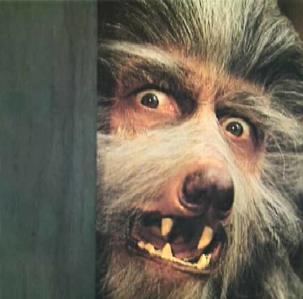
So basically I never read Beowulf and quite frankly, I never had much desire to. A lot of my friends in high school read it, but I must have skillfully avoided that requirement, because I haven't had to touch the poem until today. Honestly, I wasn't sure what to expect. I knew that there was a Beowulf movie, and although I have never seen it, I know that the main character is a wolf (at least I think so, anyway). I was kind of expecting Beowulf to be a strange werewolf guy or something of that nature, and I must say that I was a little disappointed when I discovered that this guy didn't have fangs. Lame.

So anyway, after I got over my extreme disappointment, I realized that this poem is actually really cool. My high school friends were totally wrong about it being boring. I do have to say that the old English references are a little rough and the fact that I have to keep checking the footnotes gets a little frustrating, but once you get past that aspect of it, the poem is really interesting. I, of course, got super into it when Grendel was introduced. 
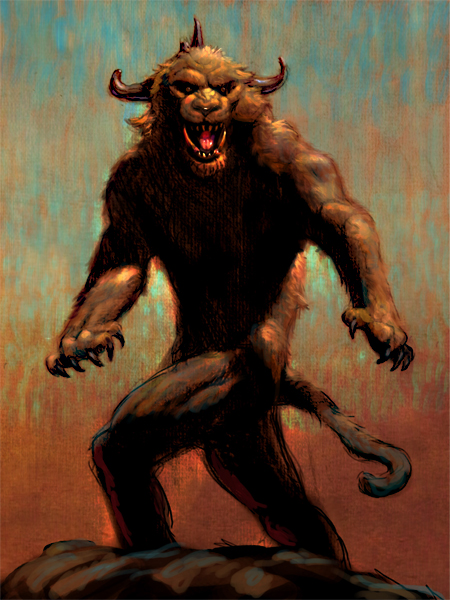
The history of Beowulf was cool and everything, but when I started to read about a "fiend from hell" (101) that was "grim and ravenous" (121) my interest was piqued. Of course, at the end of our reading it appears as though Grendel is defeated... 

Would it be wrong for me to hope that this isn't the case? Aside from Beowulf himself, I think Grendel is one of the coolest characters in the poem. I'm kind of rooting for him, but of course, I have to say that I hope Beowulf comes out on top. I guess I'm just going to have to be patient and see what happens next!

Why the heck does Beowulf remind me of Thor?

In all honesty, I thought this book would be extremely boring. I mean, who wants to read a Middle English book with some weird language and a story that is not relatable to people of today? Well then, how come I keep seeing parallels between Beowulf and Thor? Even Grendel reminds me of Loki. Some of you might not see any correlation between the two, so allow me to show you what I see.

In lines 106 to 108, Grendel is compared to Cain from the book of Genesis in the bible. For those who don't know, Cain killed his brother, Abel, in order to be the favorite son. Loki basically does this by sending a giant robot, that shoots a fire-laser out of its face, to kill Thor so that he can become king of Asgard.

Not too different from Grendel, who is a descendant of Cain. In lines 136-137, Grendel “mourned not at all/for his feuds and sins.” Loki killed a lot of people in the first Avengers movie, heck he even gouges out someone's eye.


All Grendel and Loki wanted was to rule over the people using fear; “one against all (145).”


 One last point, Loki is a frost giant and Grendel is a giant; therefore, Grendel = Loki.

Beowulf is totally Thor. Line 418, Beowulf says that he is known for his “might of…strength.” Plus he says that he has fought a “tribe of giants,” another thing Thor has done before. In lines 431-432, Beowulf says,“ I might alone, o my own band of earls/and this hardy troop,” will defeat Grendel. Could Beowulf’s band of earls and hardy troop be similar to Thor’s Lady Sif and the Warriors Three?

 
That's what it looks like to me. In line 670, Beowulf is describe as “the Maker’s favor,” in other words, he is blessed by God. Something that many people don’t know about Thor is that his hammer, Mjöllnir, was not only a weapon, but was used to bless marriages, births, and funerals. http://norse-mythology.org/symbols/thors-hammer/ So in this case, Thor is the one giving the blessings. Lastly, in lines 818-819, “Beowulf was given/glory in battle.” I wonder who else has glory in battle? You guessed it; Thor.
 
You may disagree with me, but I’m pretty sure Beowulf and Thor are practically the same person. Fight me if you want to but the similarities are there.


Holy Hashem, Batman! There's an awful lot of Christianity in this ancient epic!

For what is, according to the introduction, an ancient story about Germanic people in a pre-Christian society (Liuzza12), the Christian God sure has a lot of heft in this epic poem.

And I do mean Christian. The imagery and ethics we've seen in Beowulf aren't remotely Jewish. A lot of people like to throw around the word "Judeo-Christian" when they're talking about totally Christian things. This is one of my pet peeves. The term definitely has its use in the right time and place, but it's wildly overused. To illustrate my point, here is a brief list of Christian things people try to rope us Jews into:
  • Sin.
  • Damnation.
  • Salvation.
  • Hell.
None of these things exist in Judaism, and a lot of the religious rhetoric in what we've read of Beowulf is based on these key concepts. This story is peddling a Christian narrative, not a Jewish one. Please believe me when I say I could go on indefinitely about Christianity being thrust into Judaism. Suffice it to say that a lot of goyim (translation: gentiles) don't know a thing about Jewish religion and culture and push Christian concepts and values onto Jewish ones. Goyim gonna goy.


In any case, the two scribes that penned our single remaining original Beowulf manuscript certainly pushed their religious views onto this story (Liuzza 11). Grendel isn't just a monster; he's "God's adversary" (786) and a "captive of Hell" (787), and God has "condemned him among Cain's race" (106-107). Likewise, Beowulf isn't just a prince or a war hero; he's a warrior that "[God's] grace has guided" (382) to the Danes in order to save them from their "demon foe" (706), plus Beowulf has the added bonus of being blessed with "the Maker's favor" (670). I don't know about you, but I'm sensing a general theme. It's not particularly subtle.

Heroic stories follow a series of archetypal themes that broadly apply to most myths, legends, and folktales around the world, but stories from different cultures have different nuances that reflect the individual societal identities and values of their places and people of origin. I'm curious to know how much the story of Beowulf changed as Christian imagery was retroactively added to it.

I would also love to learn how applying Christian influence to a fairly localized ethnic myth affected the story's original audience. I know that a lot Christian myth, ritual, and iconography were influenced by religions that predated or existed around it and about how that generally popularized conversion to Christianity. I can't help but wonder if Beowulf was used as a tool to convert the heathen masses.

Although God is rather awkwardly shoved into the story, Beowulf is still an interesting and engaging read. We're actually getting pretty close to my favorite part! I've read two other translations before, but I'm looking forward reading this version for the first time!